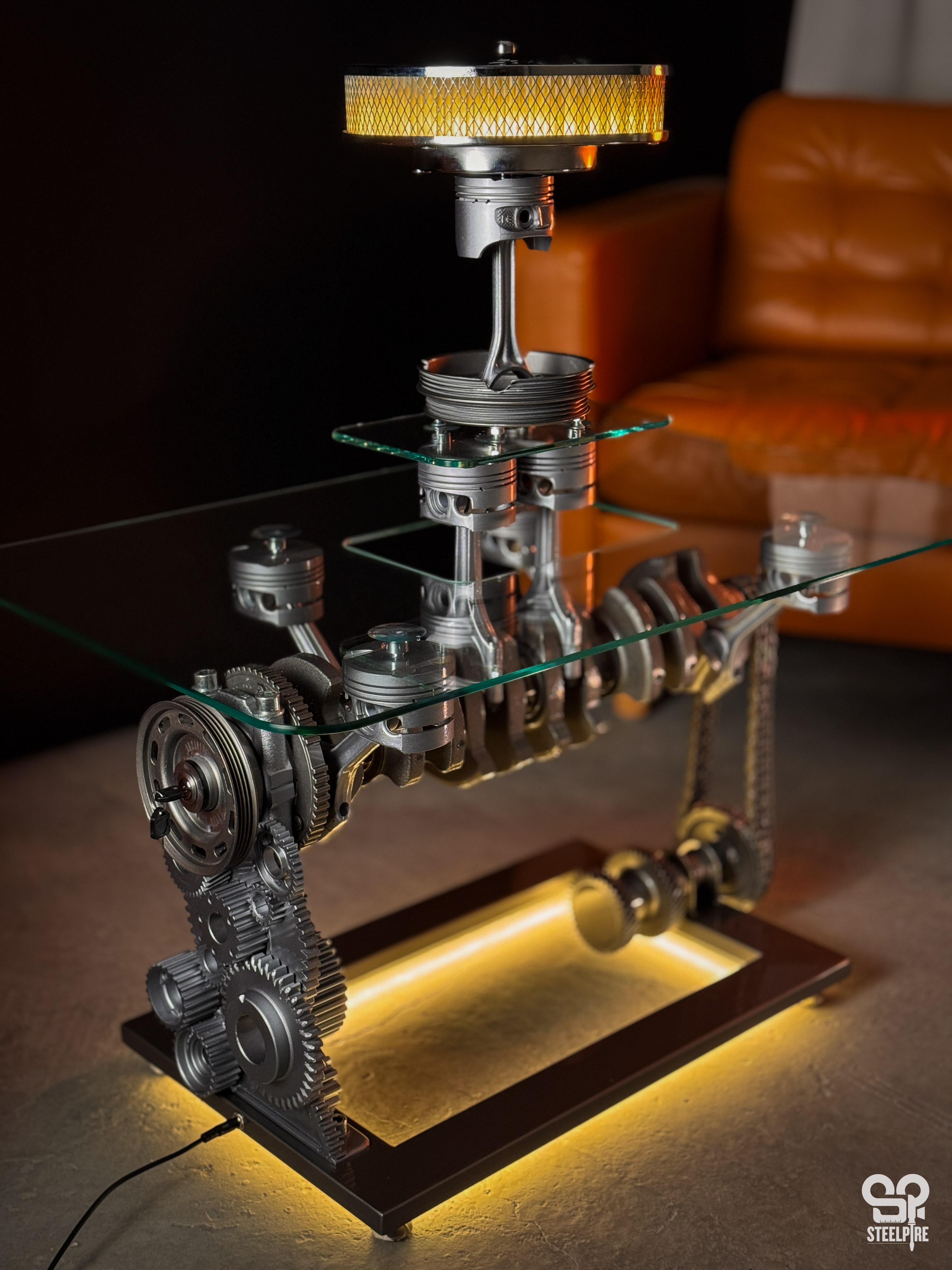
Why It’s Much Harder to Make Furniture from Car Parts?
At first glance, it might seem simple. You take an old car part, clean it up, modify it a bit, and you're done. The reality, however, is far more complex.
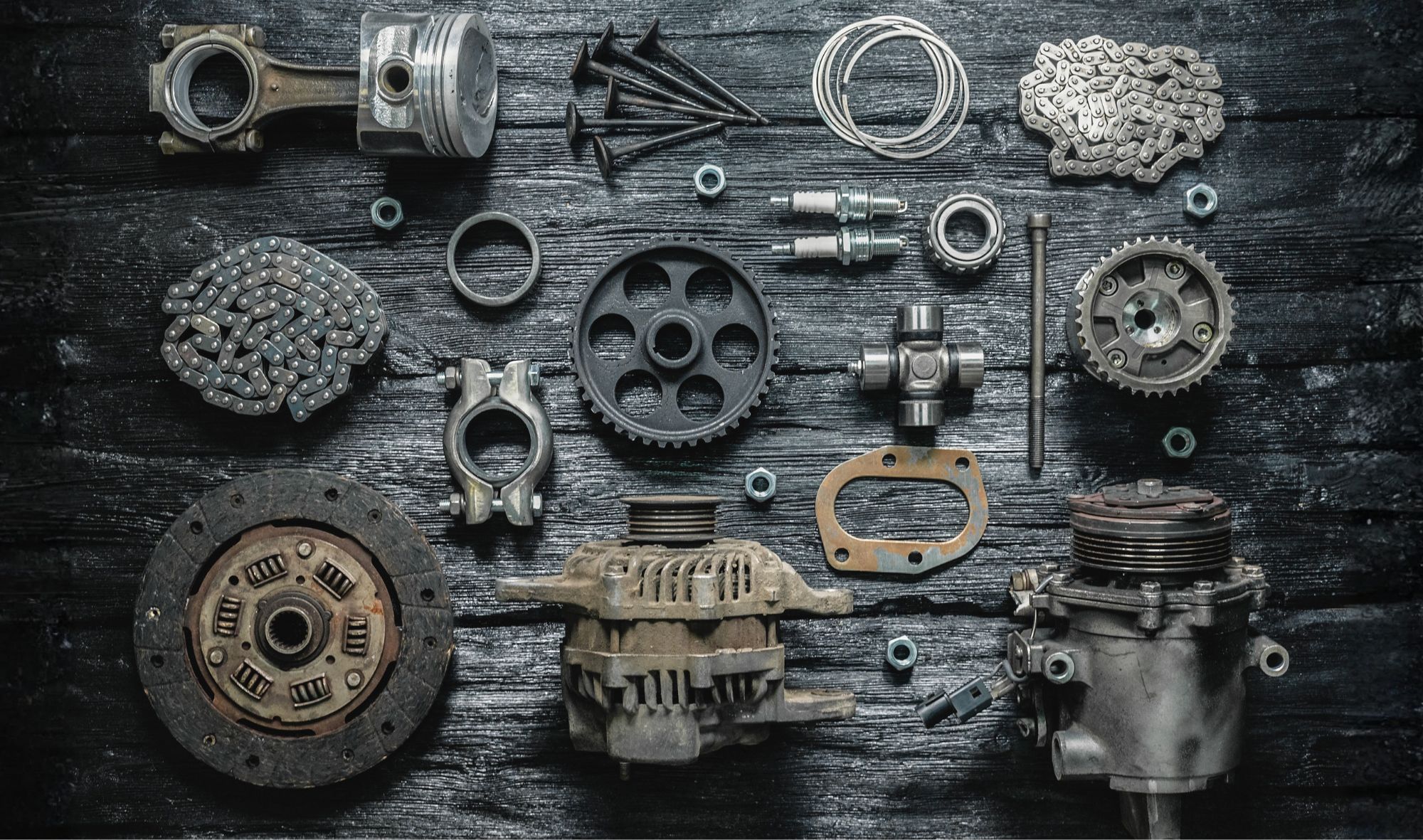
With new materials, everything is given. Straight, clean, predictable — you know the dimensions, the condition, how it behaves. With used car parts, most of that is missing. You’re essentially starting from minus one. The question isn’t what you’ll make from it, but whether you can even get it into a condition where it can be worked with at all.
This is the part no one really talks about. And it’s also where most of the time goes. Cleaning, preparation, surface treatment — oil, residue, oxidation, years of wear. It’s not something you just wipe down and move on. This is where the difference is made between something thrown together and something that actually holds together as a proper piece.
And this is where the next big difference comes in. It’s not like building furniture from pre-cut materials. There, your base is already ready to go. Here, every single piece is a different starting point — a different problem to solve.
During the making process, two things matter most. The first: it can’t feel “patched together.” The goal is not to make something that somehow works, but something that looks like it was always meant to be this way.
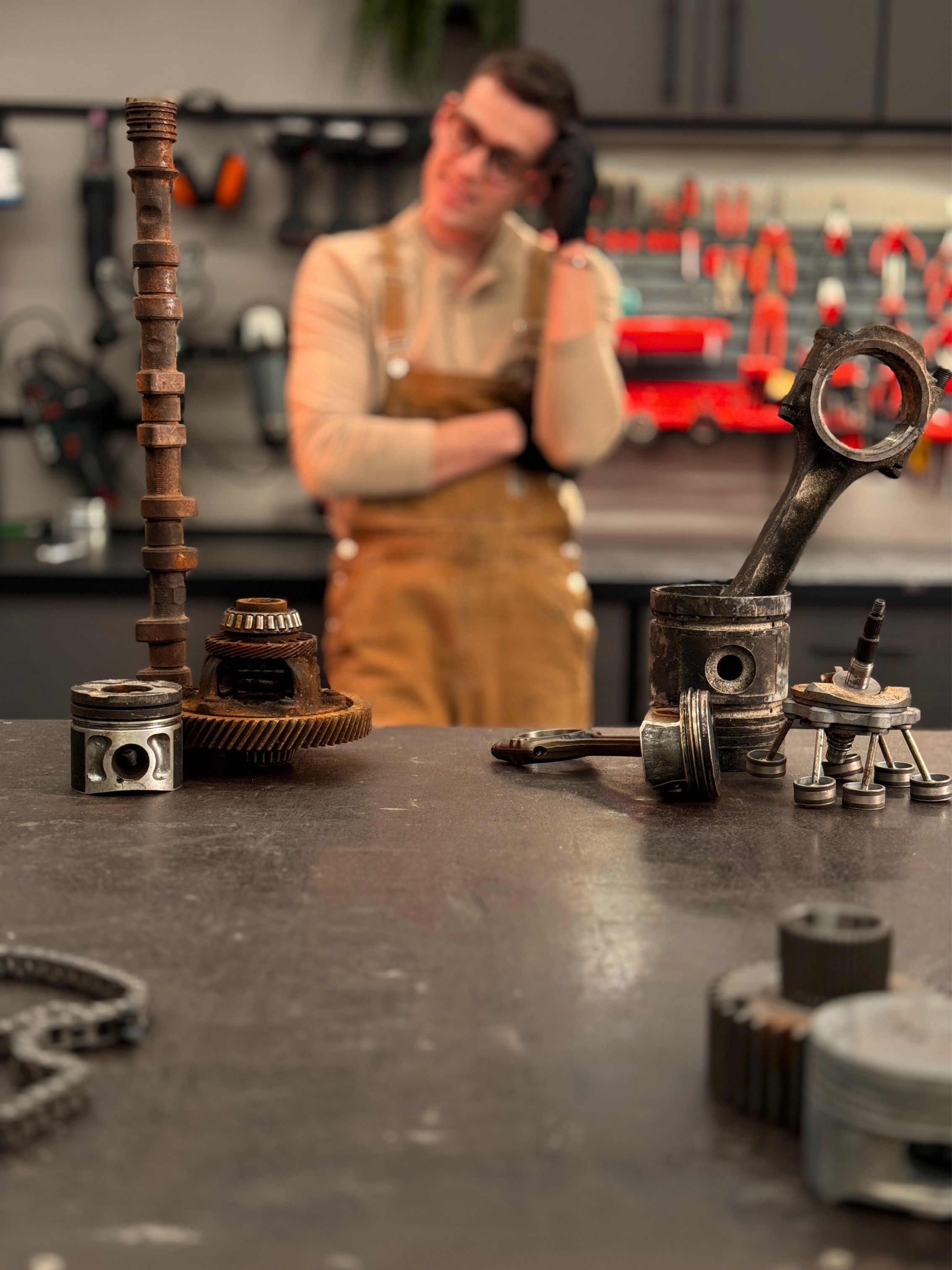
And that often doesn’t happen during execution, but before it. Thinking, problem-solving, proportions, mounting points, possibilities. Sometimes this takes as much time as the actual physical work, simply because there are no standard processes here.
The second is quality. Not the kind that shouts at you at first glance, but the kind you don’t necessarily see — you just feel it.
For example, many people simply weld together two different steel components. It’s quick, simple, and for a while, it works. Then it cracks. Instead, I create proper mounting points, drilled holes, and bolted connections. It’s far more stable, far more durable — and yes, it takes significantly more time. To an untrained eye, this isn’t always obvious, but this is exactly what makes a piece not just look good, but actually hold together.
And then there’s the material itself. These parts were never meant for decorative use. They are hardened, high-strength metals, often extremely difficult to work with. Sometimes the most logical solution would be something as simple as drilling a hole — except physically, it’s just not possible.
In those cases, there is no “we’ll figure something out.” Either you find a proper, engineered solution — or you don’t do it at all. Everything in between is just cutting corners.
This is probably why these pieces can’t be mass-produced. You can’t make them the same way, over and over again. Every single one is slightly different — and that’s exactly where their value comes from.
And in the end, you see what everyone else sees: a finished piece. But what really matters is not just what it’s made from, but how much work, decision-making, and thought went into it — in ways that aren’t immediately visible.